Knowledge and Information Science
Department of Knowledge and Information Science
The Department of Knowledge and Information Science at the University of Tabriz is one of the oldest academic departments in this field in Iran. Knowledge and Information Science is concerned with the collection, organization, storage, retrieval, dissemination, management, and effective use of information and knowledge. As an interdisciplinary field, it is closely connected with computer science, information technology, linguistics, psychology, communication studies, management, education, and other related disciplines.
This field has evolved from library science and documentation and now plays an important role in the development of the information society. Major areas of study and research in Knowledge and Information Science include information and knowledge organization, information behavior, information retrieval, knowledge management, bibliometrics, scientometrics, human–information interaction, information systems, and digital information services.
History of the Department
The Department of Knowledge and Information Science began its academic activities in 1346 SH / 1967–1968 as one of the earliest departments of library and information science in Iran. It initially operated within the former Higher Teachers’ Training Faculty, which was renamed the Faculty of Educational Sciences in 1352 SH / 1973–1974.
Following the decision of the Higher Education Planning Council on September 18, 2012, the name of the discipline was officially changed from “Library and Information Science” to “Knowledge and Information Science” in all academic levels in Iran. Today, the Department admits students at the undergraduate, master’s, and doctoral levels.
Academic Programs
The Department offers academic programs in the following levels and specializations:
1-Bachelor’s Program in Knowledge and Information Science
The undergraduate program aims to train knowledgeable and skilled professionals for work in libraries, archives, knowledge management centers, research and educational institutions, publishing houses, bookstores, scientometric centers, historical document centers, and manuscript collections.
In addition to professional competencies, students are encouraged to develop entrepreneurial skills and innovative approaches that enable them to create employment opportunities for themselves and others in information-related fields.
2-Master’s Program in Knowledge and Information Science – Information Management
The master’s program in Information Management is designed to educate specialists who can respond to the changing information environment and the evolving information needs of society. Graduates are expected to be able to manage the production, flow, organization, and use of information in libraries, information centers, governmental organizations, and non-governmental institutions.
The main objectives of this program include:
- identifying information needs and planning information management programs;
- designing and implementing information systems for libraries and information centers;
- supporting organizational planning and decision-making through effective information management;
- conducting research on information selection, acquisition, organization, processing, retrieval, and dissemination.
3-Master’s Program in Scientometrics
-
The master’s program in Scientometrics aims to train specialists who can evaluate and analyze scientific and technological outputs at local, institutional, national, regional, and international levels. This program helps provide the professional capacity required for monitoring scientific development, documenting research performance, and supporting evidence-based science and technology policy-making.
Graduates of this program are expected to acquire competencies in:
- theoretical foundations of scientometrics;
- international indicators and standards for measuring science and technology;
- analysis of scientific publications, patents, citations, and research outputs;
- evaluation of research efficiency and effectiveness;
- citation analysis and science mapping;
- provision of advisory services to research planners and policy-makers.
4-PhD Program in Knowledge and Information Science – Information and Knowledge Management
The doctoral program in Information and Knowledge Management aims to train scholars and researchers capable of teaching, conducting advanced research, and developing theoretical and applied knowledge in the fields of information management and knowledge management.
The major objectives of this program are:
- promoting advanced research on concepts, technologies, and systems of information and knowledge management;
- training qualified faculty members and researchers for higher education institutions;
- supporting organizations in managing, organizing, and developing their information and knowledge assets;
- contributing to the expansion of the frontiers of knowledge in information and knowledge management.
Mission and Objectives
The Department of Knowledge and Information Science seeks to:
- educate professional librarians, information specialists, knowledge managers, and scientometric experts;
- promote theoretical and applied research in information and knowledge-related fields;
- support the development of libraries, archives, information centers, and knowledge-based organizations;
- contribute to the advancement of the information society through education, research, and professional service;
- prepare graduates for effective participation in academic, cultural, scientific, and organizational information environments.
Career Opportunities
Graduates of Knowledge and Information Science can work in a wide range of professional settings, including:
- academic, public, school, and special libraries;
- information and documentation centers;
- the National Library and Archives and similar institutions;
- university scientometric and research evaluation centers;
- archives of governmental and non-governmental organizations;
- knowledge management units in public and private organizations;
- publishing houses, bookstores, and cultural institutions;
- historical document centers and manuscript collections;
- research, educational, and policy-making institutions.
Departmental Library and Learning Facilities
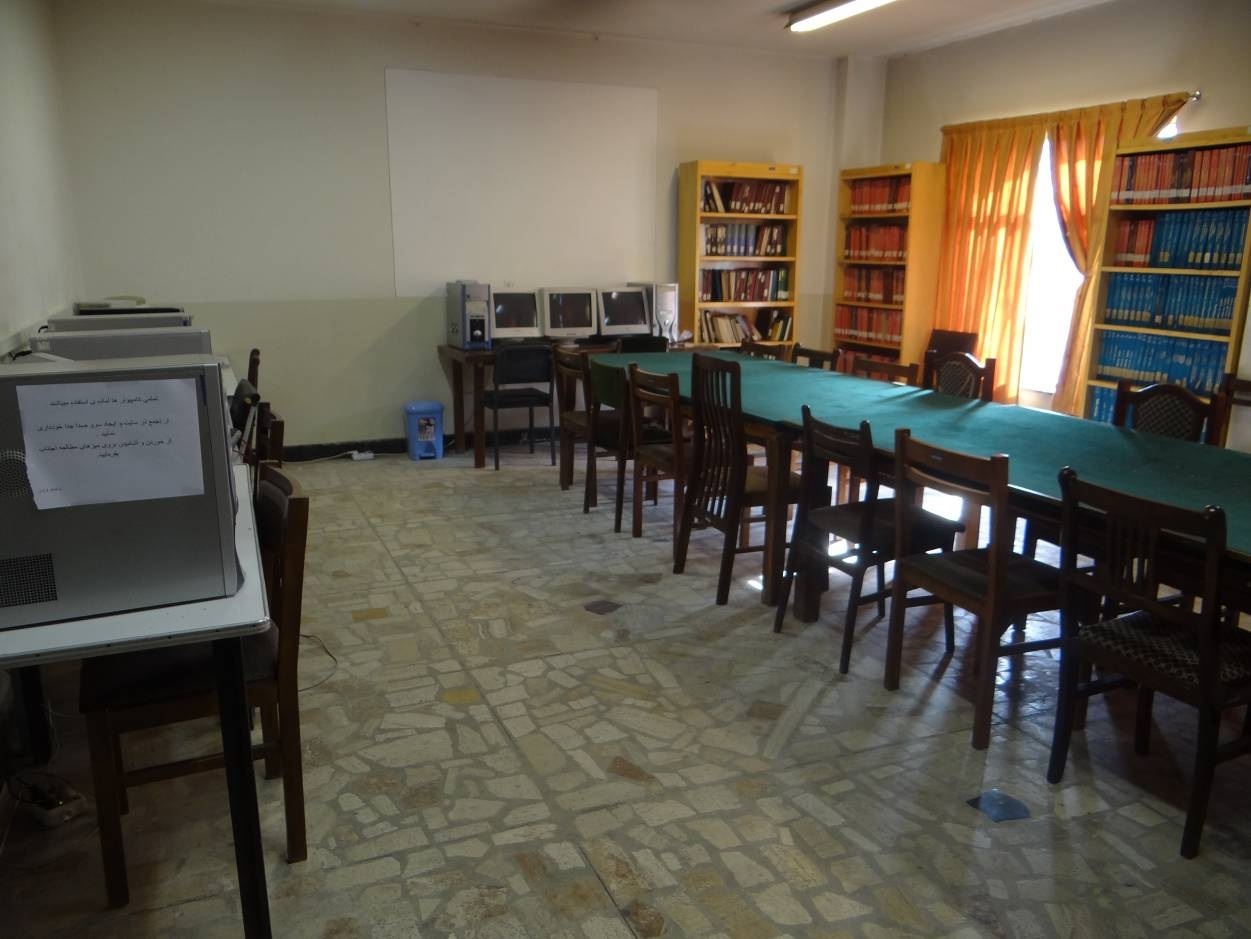
The Department benefits from educational and research facilities that support students’ academic and professional development. The departmental library and related learning resources provide access to materials in library and information science, knowledge management, information organization, scientometrics, and related interdisciplinary areas. These facilities also serve as a practical environment for learning professional skills such as library instruction, information organization, cataloging, and the use of information systems.
| Row | First name | Family name | Field of Study | Academic Ranak | Resume | Email & Phone | To see more click on pictures |
| 1 | Hashem | Atapour | PhD in Knowledge & Information Science | Associate Professor | resume |
hashematapour@gmail.com +98-4133392136 |
 |
| 2 | Afshin | Hamdipour | PhD in Knowledge & Information Science | Associate Professor |
hamdipour@tabrizu.ac.ir +98-4133392119 |
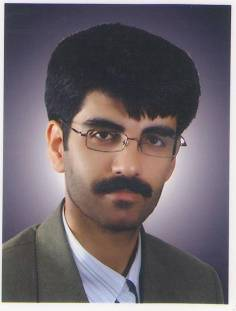 |
|
| 3 | Akbar | Majidi | PhD in Knowledge & Information Science | Assistant Professor |
akbar.majidi@tabrizu.a.ir +98-4133392146 |
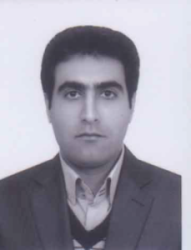 |
|
| 4 | Faege | Mohammadi | Ph. D in Knowledge & Information Science | Assistant Professor | resume |
faeghehmohammadi@yahoo.com +98-4133392085 |
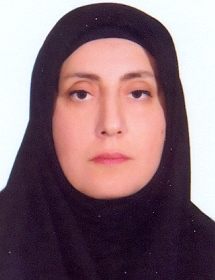 |
| 5 | Sadjad | Mohammadiyan | Ph. D in Knowledge & Information Science | Assistant Professor | +98-4133392119 |  |
|
| 6 | Torab | Najjari | PhD in Knowledge & Information Science | Assistant Professor | resume |
najjari2005@yahoo.com +98-4133392118 |
 |
| 7 | Solmaz | Zardari | PhD in Knowledge & Information Science | Assistant Professor |
szardary@tabrizu.ac.ir +98-4133392159 |
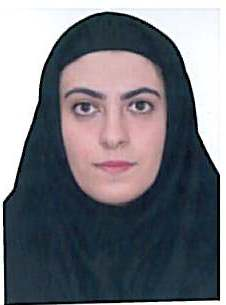 |
|
| 8 | Rasoul | Zavaraqi | PhD in Knowledge & Information Science | Professor | resume |
+98-4133392136 |
 |
| Haideh | Hassanzadeh | Secretary | +98-33392145 | ||||
 |
 |
 |
 |
 |
 |
 |